Message Queue Patterns: Pub/Sub vs Point-to-Point vs Request-Reply

Leila Azimi
November 2025
14 minute read
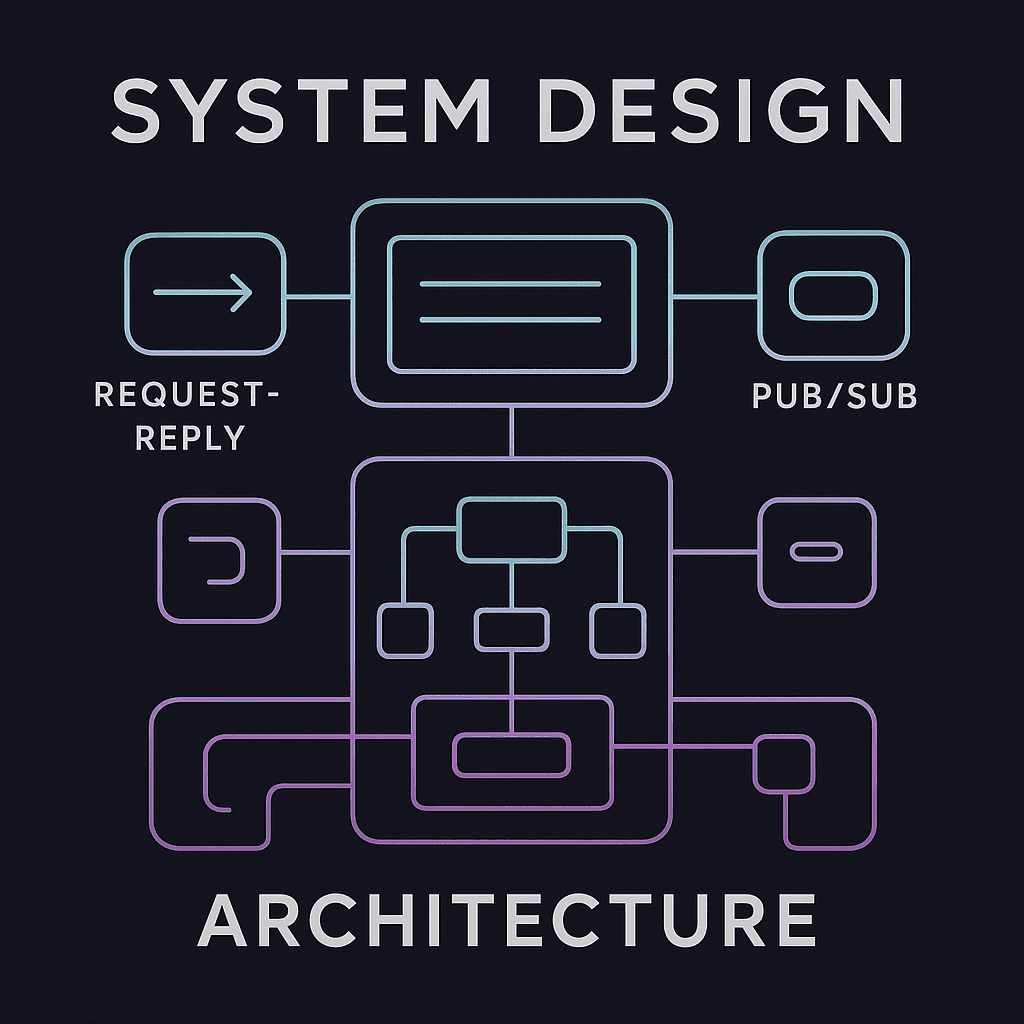
Introduction
In modern distributed systems, message queues play a critical role in enabling asynchronous communication, decoupling services, and improving scalability. Whether you're designing a microservices architecture or building event-driven applications, choosing the right message queue pattern can make or break your system's performance. In this article, we’ll dive deep into three foundational patterns—Pub/Sub, Point-to-Point, and Request-Reply—exploring their use cases, trade-offs, and implementation strategies.
Understanding Message Queue Patterns
What Is a Message Queue?
A message queue is a form of asynchronous service-to-service communication used in serverless and microservices architectures. Messages are stored in the queue until they are processed and deleted. This decouples the sender and receiver, allowing systems to scale independently.
Pub/Sub: One-to-many communication model.
Point-to-Point: One-to-one communication model.
Request-Reply: Synchronous communication with response expectation.
Pub/Sub Pattern Explained
The Publish/Subscribe (Pub/Sub) pattern allows messages to be broadcast to multiple subscribers. A publisher sends a message to a topic, and all subscribers listening to that topic receive the message. This is ideal for event-driven systems where multiple services need to react to the same event.
Use Cases: Logging, notifications, real-time analytics.
Pros: Loose coupling, scalability, flexibility.
Cons: No guarantee of message order or delivery to all subscribers.
Point-to-Point Pattern Explained
In the Point-to-Point pattern, messages are sent from a producer to a queue, and a single consumer processes each message. This ensures that each message is consumed only once, making it suitable for task distribution and job processing.
Use Cases: Background jobs, task queues, order processing.
Pros: Guaranteed delivery, message persistence.
Cons: Limited scalability without partitioning.
Request-Reply Pattern Explained
The Request-Reply pattern is a synchronous communication model where a client sends a request and waits for a response. This is commonly used in RPC-style interactions and APIs where immediate feedback is required.
Use Cases: API calls, database queries, service orchestration.
Pros: Immediate response, simple logic.
Cons: Tight coupling, latency, reduced fault tolerance.
Choosing the Right Pattern
Selecting the right message queue pattern depends on your system’s requirements. Consider factors like delivery guarantees, latency tolerance, scalability, and fault tolerance. Often, hybrid approaches are used—combining Pub/Sub for broadcasting events and Point-to-Point for task execution.
Pub/Sub: Best for broadcasting events to multiple consumers.
Point-to-Point: Ideal for distributing tasks among workers.
Request-Reply: Suitable for synchronous operations needing immediate feedback.
Best Practices for Message Queue Design
Ensure idempotency: Consumers should handle duplicate messages gracefully.
Use dead-letter queues: Capture failed messages for later inspection.
Monitor queue metrics: Track throughput, latency, and failure rates.
Secure communication: Encrypt messages and authenticate producers/consumers.
Design for scalability: Partition queues and use load balancing.
FAQ: Message Queue Patterns
What is the difference between Pub/Sub and Point-to-Point?
Pub/Sub delivers messages to multiple subscribers, while Point-to-Point ensures only one consumer processes each message.
When should I use Request-Reply over Pub/Sub?
Use Request-Reply when you need immediate feedback or synchronous communication, such as API calls or service orchestration.
Can I combine multiple message queue patterns?
Yes, hybrid architectures often use Pub/Sub for event broadcasting and Point-to-Point for task execution.
Which message queue tools support these patterns?
Tools like RabbitMQ, Kafka, Redis, and ZeroMQ support various patterns including Pub/Sub, Point-to-Point, and Request-Reply.
Is Pub/Sub suitable for critical transactional systems?
Not always. Pub/Sub may lack delivery guarantees and ordering, making Point-to-Point or Request-Reply better for transactional systems.
System Design
Message Queues
Pub/Sub
Request-Reply
Architecture